Web apps · Next.js
Web apps you actually want to maintain
Server-first Next.js, a type-safe API, and a data layer that still makes sense in year three. The senior engineers who scope your build are the ones who write it, so the code matches the plan.
What this engagement actually looks like, start to ship.
Every web engagement starts the same way: we scope the build with you, then the same senior engineers write it. You get a production-grade Next.js codebase, a type-safe API layer, and a database schema with migrations, not a prototype you have to throw away before launch.
From week one there are previews on every pull request, observability wired in with Sentry and analytics, and an onboarding doc so your team can pick it up. We finish with a handover session, not a dropped repo.
Scoped, priced, and shipped before.
- Custom software · Dubai & the UAEA custom software development company for Dubai teams that need it built righttechpotions builds bespoke web apps, AI products, and mobile apps for founders and companies across Dubai and the UAE: code-first, owned outright, and shipped in weeks, not quarters.See the build
- MVP developmentAn MVP development company that ships in six weeks, not six monthsFixed scope, fixed price, fixed date. We build the one thing your product has to prove, launch it to real users, and hand you the code. Senior engineers only, no account managers, no discovery theatre.See the build
- Offshore team · staff augmentationAn offshore software development company that is senior engineers, not a benchNo account manager, no rotating juniors, no bench you are quietly funding. You get the same named engineers every month, working your hours, on code you own. Published monthly rates.See the build
- SaaS · product buildsA SaaS development company that builds the boring parts properlyMulti-tenancy, billing, roles, audit trails, and the admin surface your team actually operates. The unglamorous machinery that decides whether a SaaS product can take a real customer, built right the first time.See the build
- Next.js · ReactA Next.js development company that has shipped the hard partsServer components, caching that behaves, migrations off WordPress that keep your rankings. We build on Next.js every day and write publicly about where it bites, which is a better credential than a badge.See the build
- Project rescueSoftware project rescue for builds that stalled and agencies that stopped answeringHalf-built, over budget, and whoever was building it is gone or going. We take custody of what exists, tell you honestly whether it can be finished or has to be restarted, and then do that. No blame, no rewrite reflex.See the build
- Code audit · AI-written codeA code audit service for software your team did not entirely writeAn independent read of your codebase: what is exposed, what will not scale, what it costs to run, and what to fix first. Written for whoever has to make the decision, not only for the engineers.See the build
- Prototype to productionPrototype to production, without rebuilding the thing that already worksYou have something real: users like it, the demo lands, the idea is proven. What you do not have is the boring half that lets it carry a thousand people, take payments, and survive a Monday. That half is the whole job here.See the build
Every potion, fully labeled.
- 01Production-grade Next.js codebase
- 02Type-safe API layer (REST or tRPC)
- 03Database schema + migrations
- 04CI/CD with previews on every PR
- 05Observability (Sentry + Vercel analytics)
- 06Onboarding doc + handover session
Boring tools, on purpose.
We pick tools for how they behave in year three, not for the launch-week demo. Here is what we reach for in this work, and the one-line reason each earns its place.
- Next.jsThe framework we default to: RSC for the heavy lifting, a thin client only where it earns it.
- TypeScriptTypes across the API boundary, so a rename is a compile error, not a 2am page.
- PostgreSQLThe boring, durable default for relational data.
- MongoDBWhen the shape is genuinely document-first, not because a tutorial said so.
- tRPCEnd-to-end type safety without hand-writing an API client.
- TailwindA design system in the markup, not a growing pile of orphaned CSS.
- VercelPreviews on every PR; the deploy story stays boring on purpose.
- SentryYou hear about the error before the customer emails.
Server-first by default
We build the kind of web apps you actually want to maintain. Server-first by default, with React Server Components doing the heavy lifting and a thin client layer for the parts that genuinely need it.
That means less JavaScript shipped to the browser, faster first loads, and a data layer that lives on the server where it belongs, not smeared across a dozen client-side fetches.
Boring tools, on purpose
No black-box vendor lock-in, no JavaScript framework du jour. We pick durable tools: TypeScript, Postgres or Mongo, Next.js, Vercel or Railway, and spend the cleverness budget on your actual product.
The test we apply to every choice is how it behaves in year three, when the original team has moved on and someone new has to change it in a hurry.
Not claims. Shipped work.
- 3×
- direct bookings within 60 days
- −35%
- WhatsApp triage volume
- 0
- ad spend in the first two months
- 98
- mobile Lighthouse score
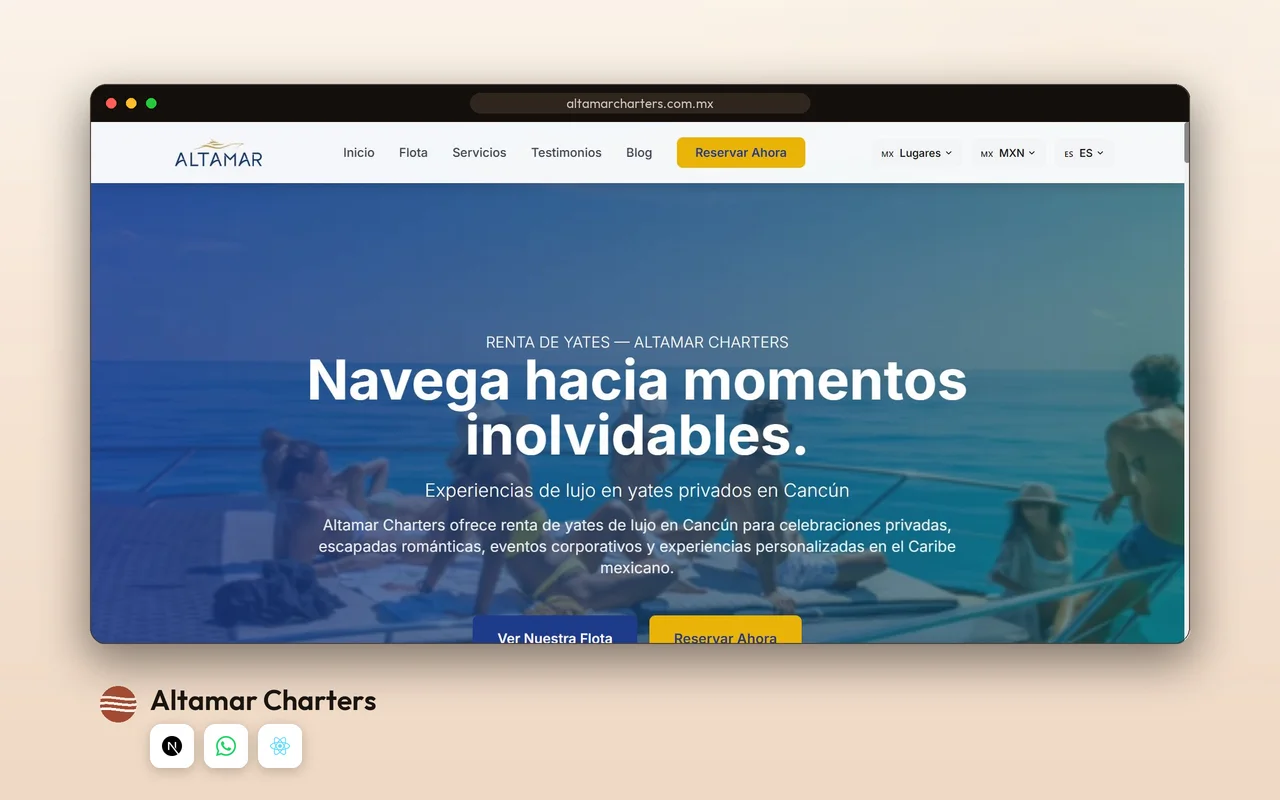
Altamar Charters — luxury yacht rentals in Cancún
A Spanish-language marketing site for a Cancún yacht-charter operator with a 20+ vessel fleet, captain-included pricing from $10,000 MXN, and booking handled directly over WhatsApp.
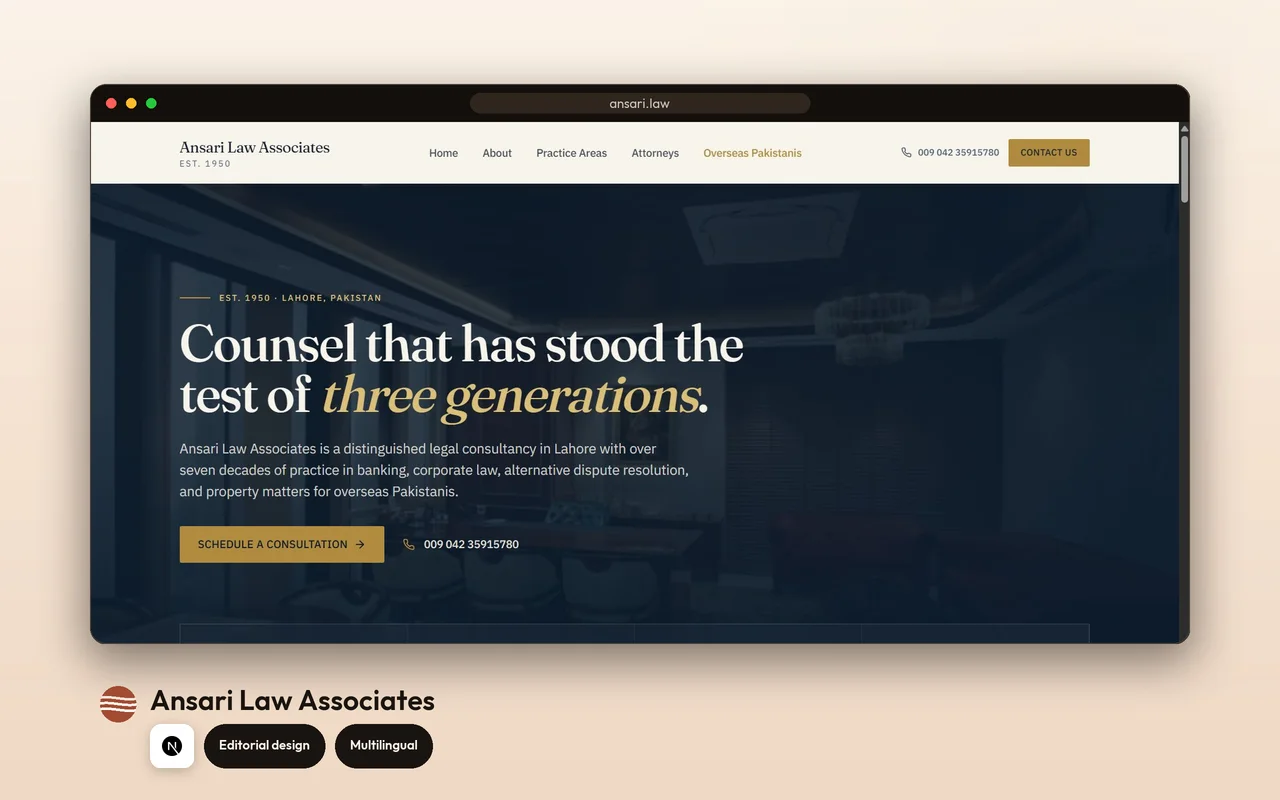
Ansari Law Associates — Lahore legal consultancy
A distinguished marketing site for a 75-year-old Lahore legal consultancy serving banking, corporate, ADR and overseas-Pakistani clients. Heavy editorial typography, restrained palette, a careful three-generations-of-practice narrative.
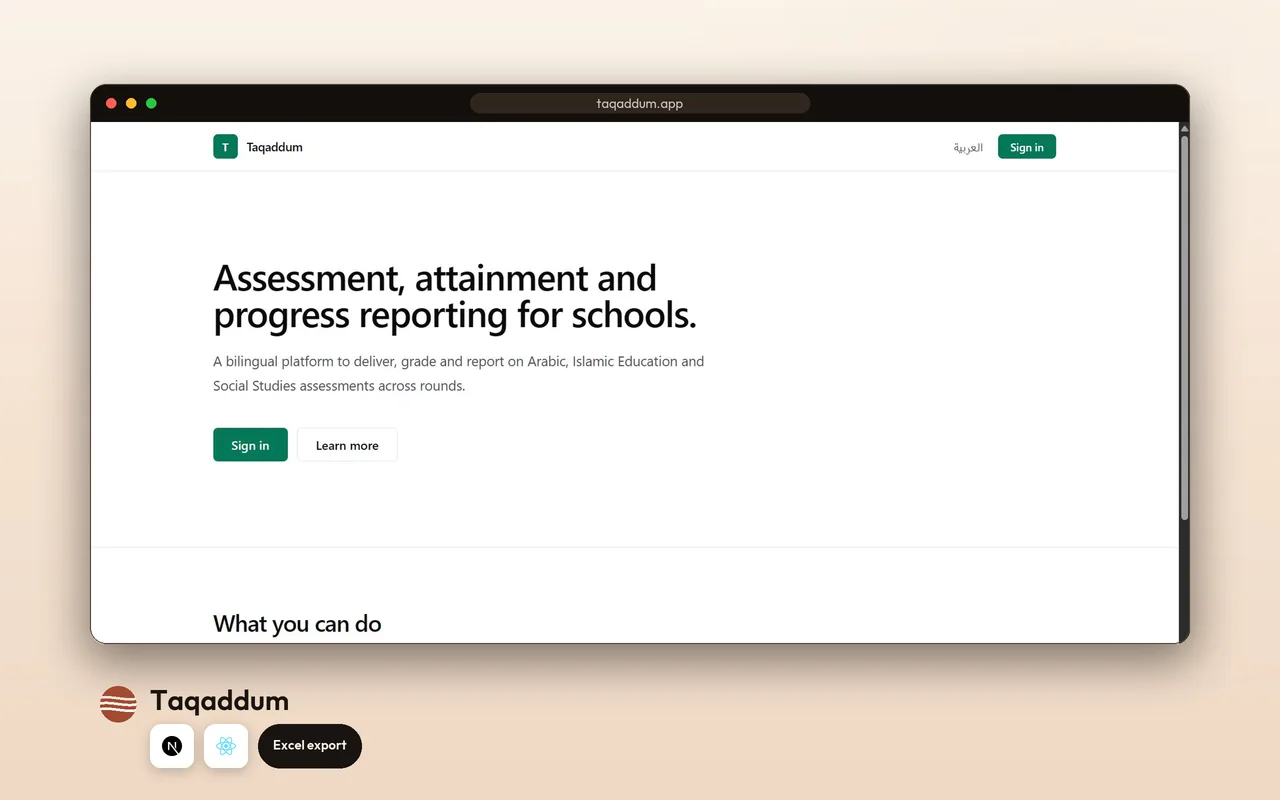
Taqaddum — bilingual school assessments
A bilingual (Arabic / English) assessment, attainment and progress-reporting platform for schools. Unified exam builder across question types, baseline + mid-year + end-of-year rounds, cohort and individual reports exportable to Excel, with school + platform co-branding.

NEPALF — Golf Classic and Solano Dinner
An event microsite for the Annual Northeast PA Leadership Fund Golf Classic and Solano Dinner, the fundraising legacy of public servant Patrick J. Solano. Carries the agenda, the venue, the registration path and the founder tribute.
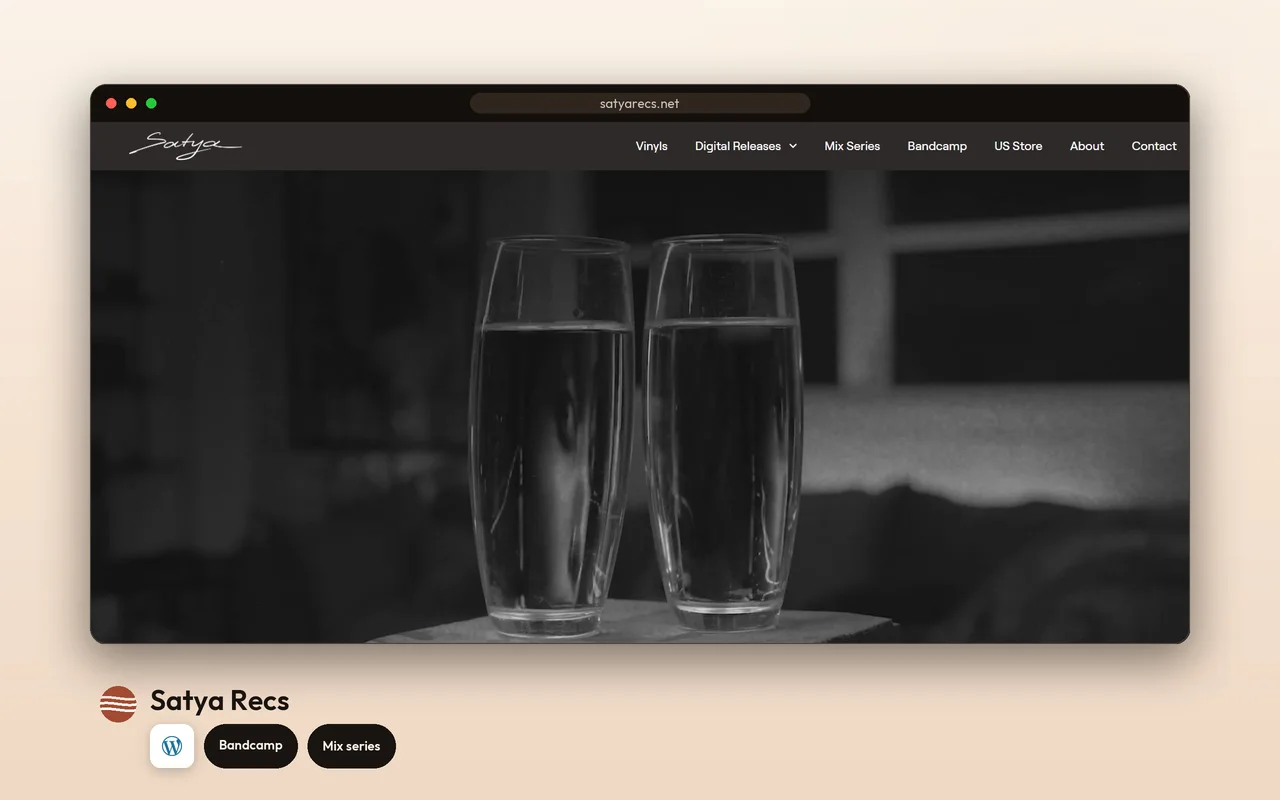
Satya Recs — Lisbon multidisciplinary label
A Lisbon-based multidisciplinary label showcasing cutting-edge electronic music, watercolour painting, landscape photography, short films and yogic teachings. Sells vinyls and digital releases, hosts a mix series, links out to Bandcamp.
How we scope and price
Web builds are priced to their real scope: the surfaces, the integrations, the data. We pin those with you first, then quote a fixed-scope build in phases you can plan around.
- A short discovery to pin surfaces, integrations, and the data model
- Fixed-scope build phases, each ending in something you can click
- Previews on every pull request from the first week
- A handover session and an onboarding doc, not a dropped repo
Tell us what you’re building and we’ll scope shape, timeline, and cost on a quick call.
Common questions.
01Can you migrate us off our current stack?
Yes; we have done multiple Rails-to-Next, Wordpress-to-Payload, and Firebase-to-Postgres migrations. Migration is its own engagement and we will not promise you a clean cutover in a week.
02Do you do mobile-responsive only, or full mobile apps?
For mobile-responsive web, we cover it inside the Web engagement. For native-feeling apps, see the Mobile service.